How to Create and Sell Restaurant Merch (Without Wasting Money)
 Simple Host Team
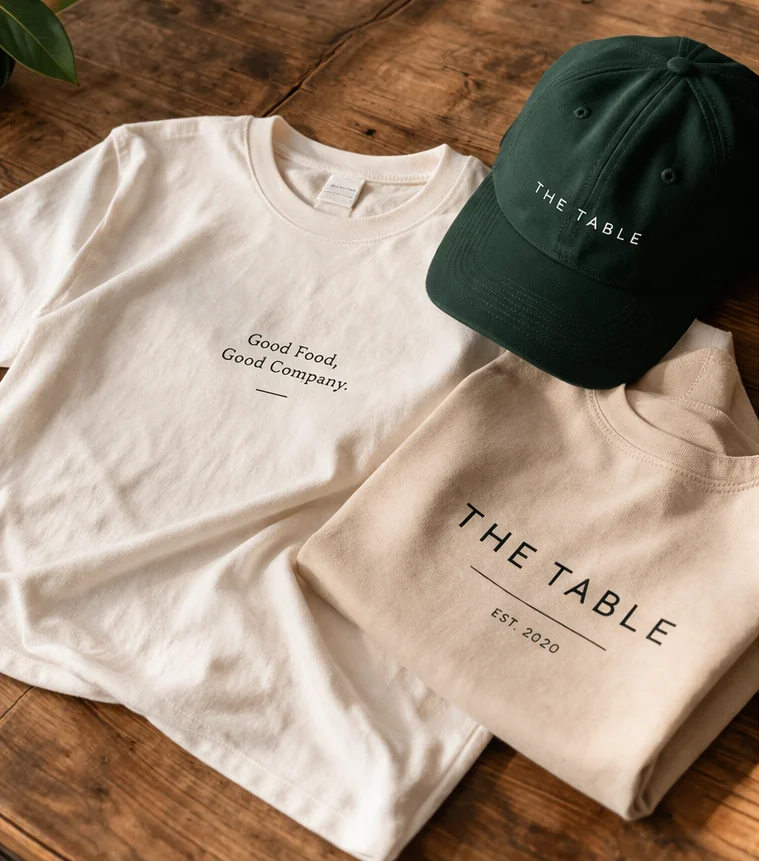
Every time someone wears your restaurant's t-shirt to the grocery store, that's free advertising. They're standing in the checkout line, and the person behind them sees your logo, your name, maybe a clever tagline. No ad spend. No algorithm. Just a loyal customer repping your spot in the wild. And here's the thing — the restaurants doing merch well aren't dropping thousands of dollars upfront to make it happen.
Why Merch Works for Restaurants
Your regulars already love your food. They tell their friends about you. They post pictures of their meals. They come back week after week. Merch just gives them another way to show that love — and it happens to benefit you every single time.
Think about it. Every t-shirt, hat, or tote bag with your name on it is a walking billboard. Not the kind people ignore on the highway, either. It's the kind that sparks conversations. "Oh, you've been to that place? Is it good?" That's word-of-mouth marketing in physical form.
There's also something deeper going on. Merch creates a sense of community. When someone buys your shirt, they're saying "I'm part of this." They belong to the club. It's the same reason people wear jerseys for their favorite sports teams — identity, belonging, pride.
And then there's the money. Merch is a secondary revenue stream with genuinely solid margins. A t-shirt that costs you $8 to print sells for $28. That's a 70% margin on something your customer is excited to buy. Try getting that margin on a plate of food.
You've seen this work in the real world. Think about the local BBQ joint that sells their house-made sauce in bottles — people buy it by the case at Christmas. Or the pizza place across town where half the neighborhood owns that one iconic t-shirt with the cartoon slice on it. Those aren't accidents. Those are restaurants that figured out their fans wanted more, and they gave it to them.
What to Sell (Start Small)
The temptation is to go all-in right away — shirts, hoodies, hats, mugs, stickers, aprons, the works. Don't do that. Start with two or three items, see what sells, and grow from there. Here's what tends to work:
- T-shirts and hoodies: The classics. They always work. Everyone wears them, and a good design gets worn over and over.
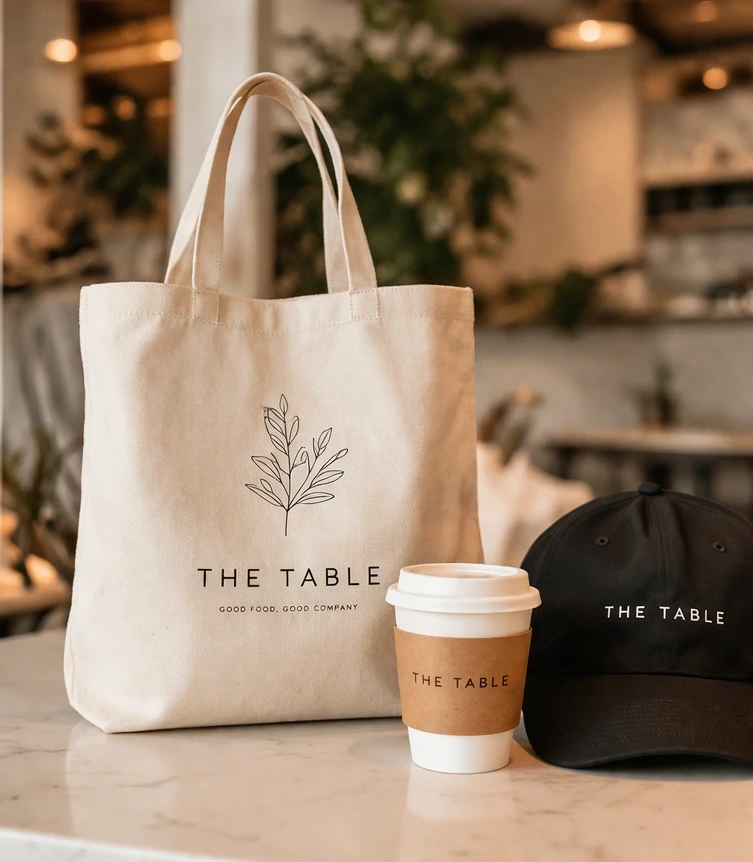
- Hats and beanies: Lower cost than shirts, and people who wear hats wear them constantly. Your logo gets seen a lot.
- Tote bags and canvas bags: Practical, reusable, and visible. People carry them to farmers markets, the gym, everywhere.
- Stickers and patches: Low cost, high volume. These are impulse buys at the register. Laptops, water bottles, car bumpers — your sticker ends up everywhere.
- Hot sauce, seasoning blends, or signature sauces: If you have a sauce or rub that people ask about, bottle it. Seriously. This is one of the highest-margin items you can sell.
- Pint glasses and coffee mugs: These live on people's shelves and get used daily. Every morning coffee is a reminder of your restaurant.
- Gift cards: Technically merch. Don't overlook them. They're the easiest thing to sell and they bring people back through the door.
- Aprons: Your fans want to cook like you. A branded apron with your logo is a surprisingly popular item, especially around the holidays.
The key: don't try to sell everything at once. Pick two or three items that make sense for your brand, test them, and expand once you know what your people actually want.
How to Get Started
Design: Keep It Simple
Your merch design doesn't need to be complicated. In fact, the simpler the better. Your logo. Your restaurant name. Maybe a tagline or your founding year. That's it. The most iconic restaurant merch out there is usually just a clean logo on a quality blank.
If you don't have a designer on speed dial, that's fine. Canva has templates specifically for merch design — you can put together something solid in an afternoon. Or hop on Fiverr and hire someone for $50-100. You don't need a design agency. You need something that looks good on a shirt.
One thing to keep in mind: what works on a menu or a business card doesn't always work on a t-shirt. If your logo has super fine lines or a lot of small text, it might not translate well to screen printing. Keep the design bold and readable from a few feet away.
Print-on-Demand vs. Bulk Ordering
You've got two main paths here, and each has its trade-offs.
Print-on-demand (services like Printful, Printify, or Spring) means you don't hold any inventory. Someone orders a shirt from your online store, the service prints it and ships it directly to them. You never touch the product. The upside: zero upfront cost, no boxes of shirts sitting in your office. The downside: lower margins (you might make $8-12 per shirt instead of $18-20) and you don't control the shipping experience.
Bulk ordering from a local screen printer is the other route. You order 24-50 shirts at a time (that's a typical minimum), pay upfront, and sell them yourself. The margins are better — usually $18-22 per shirt — but you need somewhere to store them, and you're taking the risk that they'll actually sell. For most restaurants that already have foot traffic, this is the better bet. Your customers are already in the building.
A lot of restaurants do both. Bulk for in-store sales, print-on-demand for the online store. That way you capture the impulse buyers at the register and the out-of-town fans who find you online.
Pricing: Don't Sell Yourself Short
Here's a rough guide to keep you in the right ballpark:
- T-shirts: $25-35 retail
- Hoodies: $45-60
- Hats: $25-35
- Stickers: $3-5
- Hot sauce / sauces: $8-15
- Pint glasses: $12-18
- Coffee mugs: $15-22
Don't underprice your merch. This is a common mistake. You're not competing with Target or H&M. You're selling a brand experience, a piece of your restaurant's identity. Your fans will pay for it. A $28 t-shirt from a restaurant they love is an easy purchase for most people.
Quality Matters More Than You Think
This is where a lot of restaurants mess up. They go for the cheapest blank they can find — a $3 Gildan tee that feels like cardboard and shrinks two sizes after one wash. That shirt ends up in the donation bin within a month.
Spend the extra $2-3 per shirt for better blanks. Bella+Canvas, Next Level, and Comfort Colors are the go-to options in the merch world. They're softer, fit better, and hold up wash after wash. When someone wears your shirt for three years straight, that's three years of free advertising. Worth the extra couple bucks.
Quick Tip on Blanks
Order samples before you commit to a bulk run. Wear them. Wash them. See how they hold up after five washes. A $6 blank that still looks great beats a $3 blank that falls apart every time.
Where to Sell It
You've got the merch. Now where does it go?
At the host stand or counter. This is your number one spot. People are already in your restaurant, already spending money, already in a good mood because they just had a great meal. A stack of folded shirts near the register with a simple sign — "Rep Your Spot - $28" — will outsell a hidden online store every single time. Impulse buys are real, and the register is where they happen.
Your website. Add a merch section or link out to your online store. It doesn't need to be fancy. Even a single page with photos and a way to order is enough.
Social media. Instagram posts, stories, Reels, TikTok — show the merch in action. Staff wearing it. Customers wearing it. Flat lays on the bar top. Behind-the-scenes of a new design arriving. People need to see it to want it.
Online store options. If you want a dedicated shop, Shopify is the gold standard but runs about $39/month. Square Online is free if you already use Square for payments. Etsy works if you want to reach people outside your local area. And honestly? If you're just getting started and want to test the waters, a simple Google Form where people can place orders works just fine. Don't let "I don't have a website" stop you.
Local events, farmers markets, and pop-ups. If you do any catering or pop-up events, bring merch. People who discover you at a food festival are the exact audience who'll want a shirt to remember the experience.
Marketing Your Merch
Making the merch is half the battle. Getting people to buy it is the other half. Here's what actually works:
Post it on social media. Not just once — regularly. Show your staff wearing it behind the line. Repost customers who tag you wearing their gear. Make it part of your content rotation. A photo of your bartender in a branded hoodie pouring drinks is better advertising than any paid ad.
Give a free shirt to your best regulars. Pick five or ten of your most loyal customers and surprise them. "Hey, we made shirts — this one's on us." They will post about it. They will tell their friends. The $8 that shirt cost you will come back tenfold.
Run a promo. "Buy a shirt, get a free appetizer" is a classic for a reason. It moves merch and it gets people ordering food they might not have otherwise. Win-win.
Include merch in giveaways and contests. "Follow us and tag a friend to win a merch pack" is easy engagement and gets your brand in front of new eyeballs.
Feature it in your physical space. Frame a shirt on the wall. Put stickers on your to-go bags. Display hats on a shelf near the entrance. If you treat your merch like it matters, your customers will too.
Seasonal drops. Limited edition holiday designs, anniversary shirts, summer collections — these create urgency. "Only 50 made" is a powerful phrase. People buy things they think might run out.
Staff wearing the merch is your best advertising. This one's free and obvious, but a lot of restaurants miss it. If your whole team is wearing branded gear during service, every customer sees it. It looks professional, it builds brand identity, and someone will ask "can I buy one of those?" before the night is over.
Common Mistakes to Avoid
A few things that trip people up:
- Ordering too much inventory upfront. Start with a small run — 24-36 pieces. See what sells. See what sizes move. Then reorder based on real data, not guesses. Nothing worse than a closet full of XL shirts nobody wants.
- Bad design. If your logo doesn't look good on a shirt, fix the logo first. A cluttered, hard-to-read design won't sell no matter how much you promote it. Simple, bold, clean.
- Pricing too low. You're not a fast fashion brand. You're selling something with meaning behind it. A $15 shirt signals "cheap." A $28 shirt signals "worth it." Your fans know the difference.
- Not displaying it prominently. If people can't see it, they can't buy it. Merch tucked away in a back corner might as well not exist. Put it where every customer walks past it.
- Ignoring online sales. Not everyone who loves your restaurant lives nearby. Former regulars who moved away. Tourists who visited once and fell in love. People who found you on social media. They all want merch, and they need a way to buy it from wherever they are.
The Bottom Line
You don't need a huge budget to start selling restaurant merch. You need a logo you're proud of, one or two items that make sense for your brand, and a spot to display them where your customers can actually see them. That's it.
The restaurants killing it with merch didn't launch with a full product line. They started with a single t-shirt design and a stack of 24 shirts at the register. Some of those shirts sold. Then they printed more. Then they added a hat. Then a hot sauce. It grew because they started.
So start. Pick the item. Get it made. Put it out there. Your regulars are already your biggest fans — give them something to prove it.
Focus on What Matters
Running a restaurant is already a lot to manage — that's why we built Simple Host to handle the host stand, so you can focus on things like growing your brand. Start your free trial today.
Let Simple Host handle your front of house
Waitlist management, SMS notifications, reservations, and more — so you can spend your time building your brand. Try it free for 7 days.
Start Free Trial
Simple Host Team
The Simple Host team is made up of restaurant industry veterans and tech experts dedicated to making restaurant management easier for everyone.